
Categories
EscrowPublished July 11, 2025
Understanding the Escrow Process: A Step-by-Step Breakdown


Understanding the Escrow Process: A Step-by-Step Breakdown
Everything Southern California Buyers and Sellers Need to Know
When you’re buying or selling a home in Southern California, the word escrow will come up a lot—and for good reason. Escrow is a crucial part of the real estate transaction process, helping protect both buyers and sellers. But if you’re new to real estate or haven’t bought or sold a home in a while, escrow can seem confusing.
Here’s a clear, step-by-step breakdown of what the escrow process looks like so you can navigate it with confidence.
What Is Escrow, Exactly?
In real estate, escrow is a neutral third-party account that holds money, documents, and instructions until all terms of a home purchase are met. The escrow company ensures both buyer and seller fulfill their obligations before the property and funds change hands.
Step-by-Step Guide to the Escrow Process in Southern California
1. Opening Escrow
Once an offer is accepted and a purchase agreement is signed, the listing agent informs escrow that an offer has been accepted and provides the buyer's agent information. Then, buyer’s agent contacts an escrow company to open an account and shares the buyer's contact information. The buyer then deposits earnest money—typically 1–3% of the purchase price—into escrow within three days (or as specified in the contract). This shows serious intent and commitment to purchase the property.
The escrow officer will begin assembling documents and coordinating with all parties, including agents, lenders, and title companies. Escrow will provide an "Opening Escrow" packet with documents pertaining to the sale for the buyer and seller to review and sign.
2. Title Search & Preliminary Report
The escrow company orders a preliminary title report through a title company. This report shows the legal ownership of the property and any recorded issues such as:
-
Tax liens
-
Judgments
-
Easements
-
Outstanding loans
The buyer and their agent will review the report to ensure there are no red flags. Any title issues must be resolved before closing.
3. Inspections & Seller Disclosures
Within the first week or two of escrow, the buyer typically completes property inspections:
-
General home inspection
-
Termite/pest inspection
-
Roof, HVAC, foundation, or sewer inspections (if applicable)
Simultaneously, the seller provides disclosure documents, including:
-
Transfer Disclosure Statement (TDS)
-
Natural Hazard Disclosure (NHD)
-
Any known material defects
The buyer may request repairs or credits based on the findings, and both parties may renegotiate the terms before moving forward. At this time escrow will begin the paperwork to initial any transfers such as an HOA or leased Solar unit.
4. Appraisal & Loan Processing
If the buyer is financing the home, the lender will schedule an appraisal to determine if the home’s value supports the loan amount. Although it is rare, if the appraisal comes in low, the buyer may need to:
-
Cover the difference out of pocket,
-
Renegotiate with the seller,
-
Or potentially walk away if the contract allows.
At the same time, the lender gathers documents from the buyer (pay stubs, bank statements, credit reports) to process and underwrite the loan.
5. Contingency Removals
Buyers typically have a set period (10–21 days in most Southern California contracts) to remove contingencies related to:
-
Inspections
-
Appraisal
-
Loan approval
-
Title
Once removed in writing, the buyer is committing to move forward with the purchase. If the buyer backs out after removing contingencies, they may forfeit their deposit.
6. Final Walkthrough
A few days before closing, the buyer's agent conducts a final walkthrough of the property. The purpose is to:
-
Confirm that the property is in the same condition as when escrow opened
-
Ensure agreed-upon repairs have been completed
-
Check that no new damage has occurred
This is not another inspection, but a chance to verify that the home is ready for move-in.
7. Closing Escrow
Once loan documents are signed and the lender has funded the mortgage, the escrow company prepares the final settlement statements and disburses funds:
-
The seller receives the sale proceeds
-
Agents are paid their commissions
-
Any outstanding liens are paid off
Then, the deed is recorded with the county recorder’s office (for example, Los Angeles, San Diego, or Orange County). Once the recording is confirmed, the buyer officially owns the home, and keys are handed over!
How Long Does Escrow Take in Southern California?
Typical escrow timelines are 30–45 days, depending on the complexity of the deal, loan approval, and inspections. All-cash deals can close in as little as 10–14 days.
Delays can happen if:
-
The appraisal comes in low
-
There are financing complications
-
Inspection or title issues arise
That’s why working with experienced professionals is key.
Why Escrow Matters
Escrow protects both the buyer and seller by ensuring that no funds or property change hands until all contractual obligations are met. In a high-stakes transaction like real estate, having a neutral third party manage this process helps avoid conflict and legal issues.
Final Thoughts
Buying or selling a home in Southern California doesn’t have to be overwhelming. Understanding the escrow process—from deposit to closing—can ease your stress and help you make confident decisions.
Whether you're a first-time buyer or a seasoned investor, having a knowledgeable real estate team by your side can make all the difference. If you're getting ready to start your real estate journey, contact us today—we’re here to guide you through every step.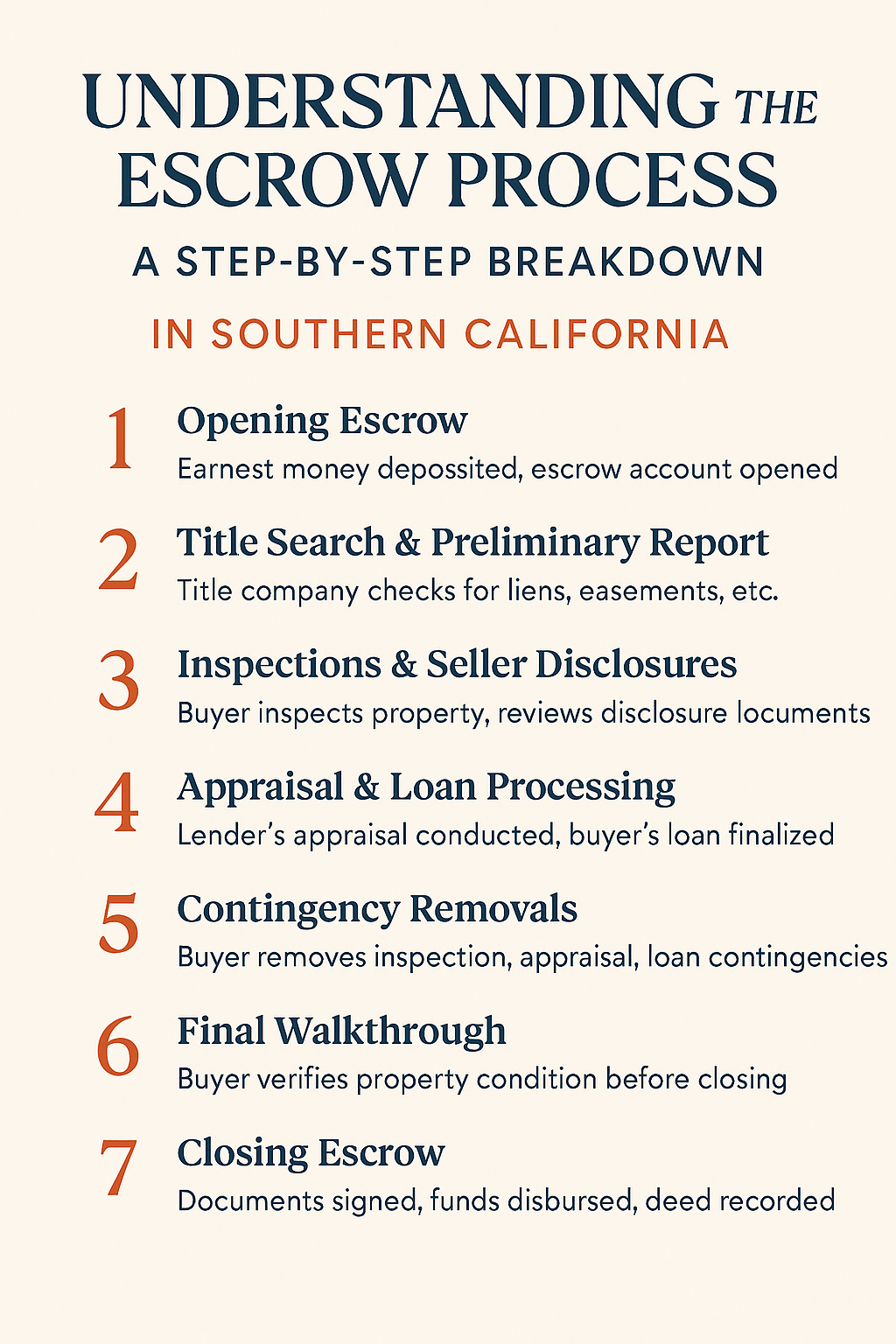
or another way