
Categories
MarketPublished June 26, 2026
Why Orange County Real Estate Doesn’t Follow National Trends

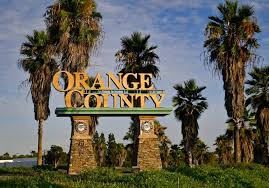
Orange County real estate often behaves differently from national housing headlines. While the U.S. market may show slowing sales or affordability challenges, Orange County tends to remain more stable than most regions.
Nationally, existing home sales have remained below historical averages in 2026, according to the National Association of Realtors. Higher mortgage rates in the mid-6% range have reduced affordability and slowed transaction volume across the country.
But Orange County is structurally different.
The biggest factor is supply. Orange County has extremely limited land for new development. With the ocean on one side and mountains on the other, there is very little room for expansion. That alone creates long-term scarcity.
On top of that, zoning laws and development restrictions make large-scale housing construction difficult. Even when demand slows, inventory does not rise enough to shift pricing significantly.
Another key factor is the income base. Orange County is supported by strong employment sectors including healthcare, technology, aerospace, education, and finance. These industries tend to be more stable than markets dependent on single-sector employment.
A major 2026 dynamic is the “rate lock effect.” Many homeowners refinanced during 2020–2021 into mortgage rates below 4%. With current rates around 6.5%–6.6%, many homeowners are financially disincentivized to sell.
This reduces inventory even when demand cools. As a result, Orange County often experiences fewer sales, but not dramatic price declines.
It’s not a demand-driven market — it’s a supply-constrained one.
or another way